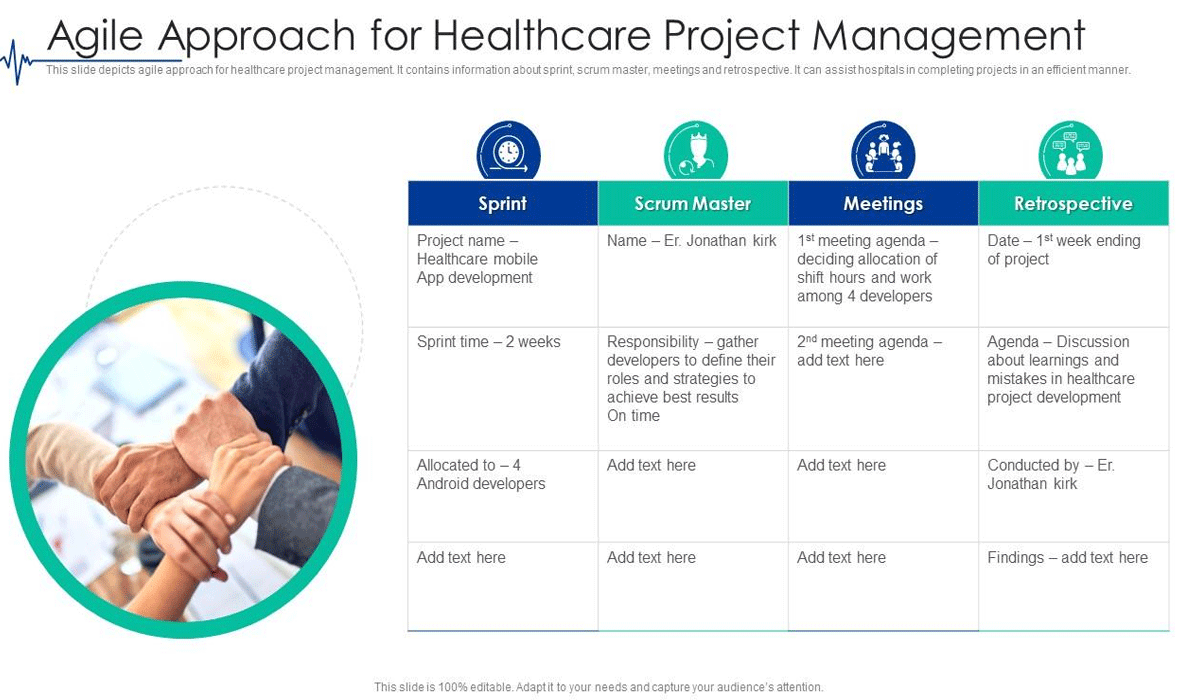
Agile Approach in Medicare Contact Center Project Management
In today’s rapidly evolving healthcare environment, efficiency and responsiveness are critical factors in delivering quality patient support services.
Medicare Contact Centers play a vital role in ensuring beneficiaries receive timely assistance, accurate information, and seamless communication. To meet increasing demands and complexity, many organizations are adopting Agile methodology in project management.
This approach allows teams to be more flexible, adaptive, and customer-focused. This article The Health Universe explores how Agile principles can be effectively applied to improve Medicare Contact Center project management outcomes.
Understanding Agile in Medicare Contact Center Projects
Agile is a project management approach that emphasizes flexibility, collaboration, and continuous improvement. In the context of Medicare Contact Centers, Agile helps teams respond quickly to changes in regulations, patient needs, and technological updates. Instead of following a rigid plan, Agile projects are broken into smaller iterations called sprints, allowing for frequent evaluation and adjustment.
This is particularly useful in healthcare communication systems where requirements can change rapidly. By using Agile, project teams can deliver incremental improvements to contact center systems while maintaining high service quality and compliance standards.
Benefits of Agile Implementation in Healthcare Communication
Implementing Agile in Medicare Contact Center projects brings several benefits. First, it enhances responsiveness to patient inquiries by enabling faster system updates. Second, it improves team collaboration, as cross-functional teams work closely together throughout the project lifecycle.
Additionally, Agile promotes transparency through regular progress reviews and stakeholder feedback. This ensures that project goals remain aligned with patient needs and organizational objectives. Ultimately, Agile increases efficiency and reduces the risk of project failure in complex healthcare environments.
Read Also: Complete Guide To Medicare Contact Services And Support
Key Agile Practices for Contact Center Optimization
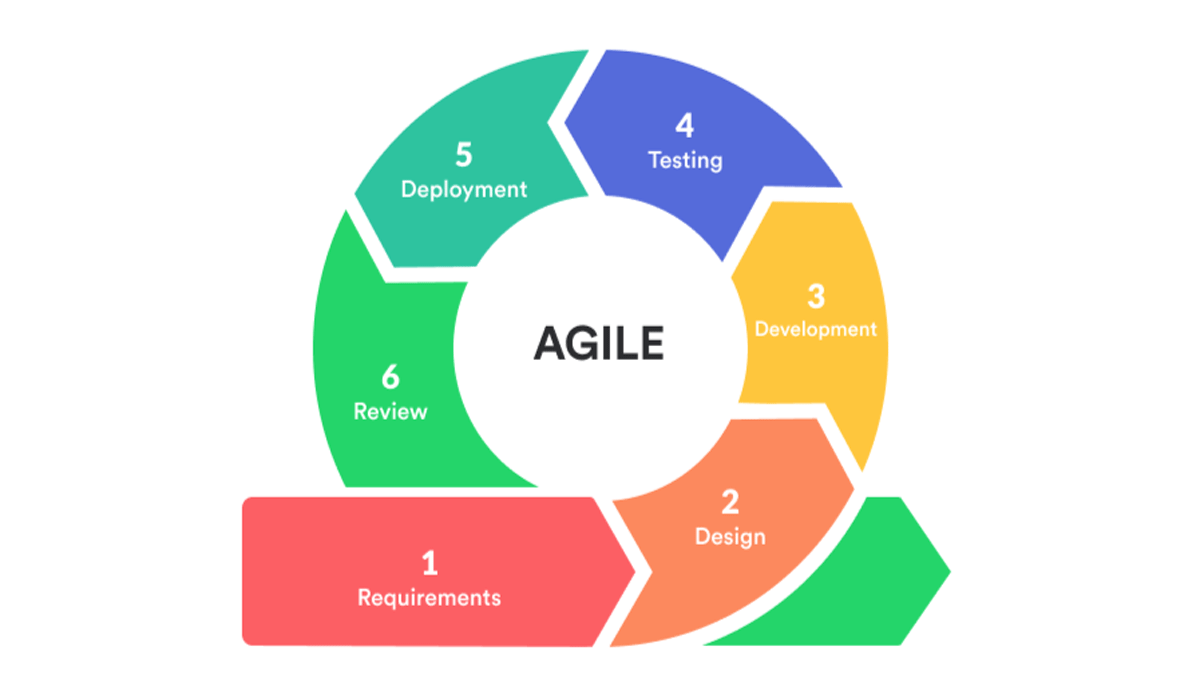
Several Agile practices are especially effective in Medicare Contact Center projects. Daily stand-up meetings help teams stay aligned and quickly address issues. Sprint planning ensures that tasks are clearly defined and prioritized based on urgency and impact.
Another important practice is continuous testing and feedback collection. This allows teams to identify problems early and implement improvements without delaying overall project progress. Retrospectives at the end of each sprint also encourage learning and process refinement.
Challenges in Applying Agile to Medicare Systems
Despite its advantages, implementing Agile in Medicare Contact Centers is not without challenges. One major issue is resistance to change, especially in organizations accustomed to traditional project management methods. Employees may require training to fully understand Agile principles and workflows.
Another challenge is maintaining compliance with strict healthcare regulations while remaining flexible. Balancing adaptability with regulatory requirements can be complex and requires strong governance and oversight within Agile teams.
Future of Agile in Medicare Contact Center Management
The future of Medicare Contact Center management is likely to be heavily influenced by Agile methodologies. As healthcare systems become more digital and patient expectations continue to rise, the need for fast, adaptive project management will increase.
Emerging technologies such as artificial intelligence and automation will further enhance Agile processes by providing real-time data and insights. This will enable contact centers to deliver more personalized and efficient patient support services, ensuring better healthcare experiences overall.